

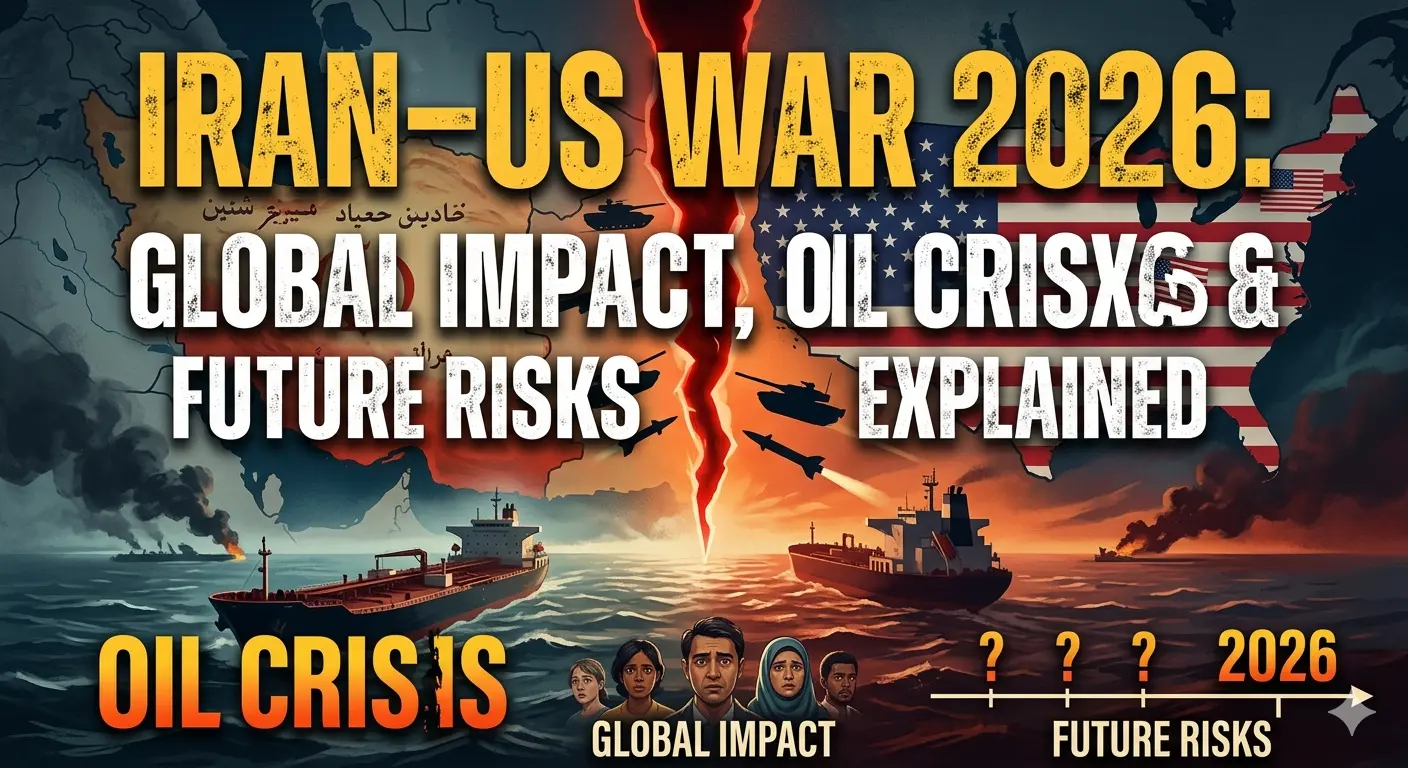
The ongoing conflict between Iran and the United States in 2026 has become one of the most significant geopolitical events of the decade. What initially began as rising tensions over nuclear policies and regional influence quickly escalated into a full-scale military confrontation involving multiple countries in the Middle East. The war has not only impacted the countries directly involved but has also shaken the global economy, energy markets, and political stability worldwide.
The roots of the conflict can be traced back to long-standing disagreements over Iran’s nuclear program and its role in regional conflicts. In early 2026, tensions reached a breaking point when the United States, along with its allies, launched airstrikes targeting Iranian military and strategic infrastructure. Iran responded with missile and drone attacks on U.S. bases and allied nations, escalating the situation into a broader regional conflict.
One of the most critical aspects of this war has been its impact on global energy supply. Iran temporarily closed the Strait of Hormuz, a key route through which nearly 20% of the world’s oil supply passes. This action caused oil prices to surge dramatically, leading to inflation and economic instability across the globe. Countries heavily dependent on imported energy faced rising costs, while global markets experienced volatility and uncertainty.
Economically, the war has already caused significant damage. According to international financial institutions, global growth forecasts have been reduced due to the conflict. Inflation has increased, and industries reliant on energy and transportation have been particularly affected. At the same time, certain sectors such as defense, renewable energy, and artificial intelligence have experienced growth due to increased demand and shifting priorities.
Despite the intensity of the conflict, there have been moments of temporary relief. A short ceasefire agreement allowed the reopening of key shipping routes, which led to a drop in oil prices and a temporary boost in global stock markets. However, these agreements have remained fragile, and uncertainty continues to dominate global markets.
Another important dimension of the war is its humanitarian impact. Thousands of civilians have been displaced, infrastructure has been damaged, and essential services disrupted. The war has also intensified political divisions globally, with countries taking sides based on strategic interests and alliances.
Looking ahead, the future of the Iran–US conflict remains uncertain. While diplomatic efforts continue, the risk of escalation still exists. Analysts suggest that even if the war ends soon, its economic and political consequences will be felt for years to come. Markets, governments, and industries are already adapting to a new reality shaped by geopolitical instability.
In conclusion, the Iran–US war is not just a regional conflict—it is a global crisis with far-reaching implications. From energy markets to international relations, its effects are being felt across every sector. The world now watches closely as leaders attempt to navigate one of the most complex and dangerous conflicts in recent history.













Leave a comment